The work
The conviction that became Wisdom Study Abroad started in 1973, on Jim and Shelley Hagan’s first trip to the Himalayas. Jim went on to live in India and Nepal for ten years, studying Tibetan Buddhism at Kopan Monastery, the Library of Tibetan Works & Archives in Dharamsala, and Ganden Monastery in South India. By the mid-90s he was teaching at Castleton University and Johnson State College of Vermont. Shelley — a Yale MFA sculptor with her own deep history of study across Asia and Europe — taught at University of Vermont and ran her own parallel art history programs to Greece and Italy.
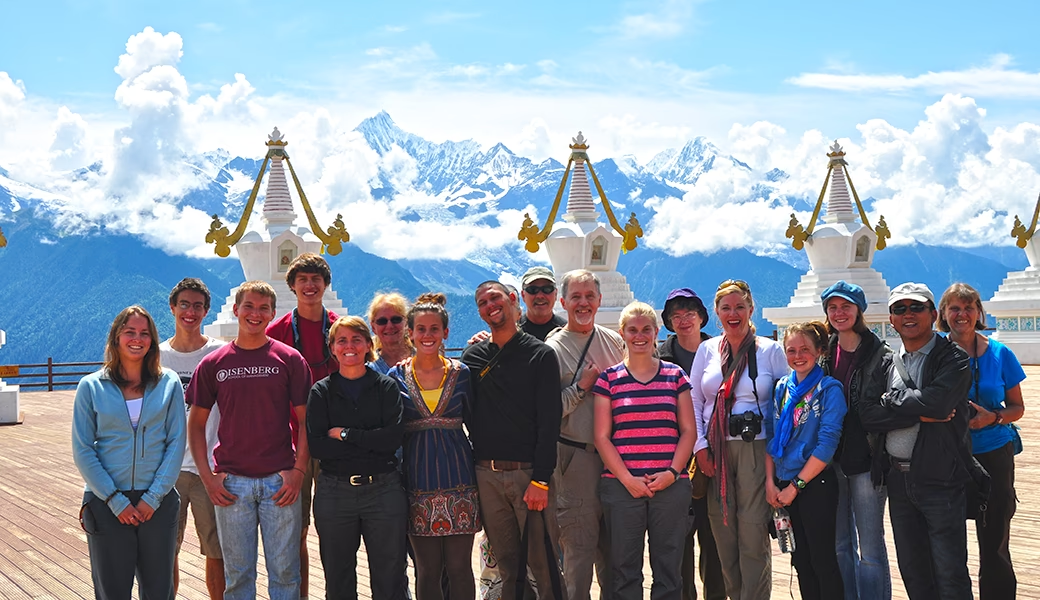
Wisdom Study Abroad was the way Jim brought what he knew to American college students. Not semester abroad — two-week intensives, dense enough to count for six credits. Students lived among guides, scholars, and monks Jim had been in conversation with for decades, in some cases since before the business existed. They didn’t just visit monasteries — they studied inside them. They didn’t just observe — they volunteered. By the time the programs closed, more than 2,500 students had traveled with them.
The students came from everywhere. Castleton, of course — Jim’s home institution — but also UVM, Burlington College, Saint Michael’s, SUNY Purchase, University of Hartford, Rhode Island College, University of Colorado Boulder, and dozens of other schools. Wisdom Tours did the same kind of immersion for adults — smaller, less academic, but with the same heart.
We built the sites that found those students, recruited them, took the deposits, kept the parents informed, and gave faculty advisors a place to send their best questions. The sites worked. Year after year, cohort after cohort.
The arc
The first Wisdom Tours site went live in 1999, before Downhill Media existed as a studio. Wisdom Study Abroad followed shortly thereafter. Shelley’s Greece for Women tour had its own site for a time too. Over the years, the family of sites expanded and contracted as the programs themselves did — dedicated destination sites came and went; some were folded back into the main site once the audience knew the program well. There was no master plan; we built what each year needed, and rebuilt it when the year after asked for something different.
Some changes weren’t planned at all. Geo-politics has a way of rewriting itineraries — Tibet’s borders closed to outside travel more than once over the years, sometimes with weeks of lead time. When that happened, we’d swap the destination — Myanmar one year, China another, Italy when it had to be — and rush new collateral, new program details, and new outreach to the students already enrolled, asking them whether they still wanted to come along. They almost always did.
Across all of it, the sites were rebuilt many times. Two decades is enough time for the web to change several times underneath a project. Static HTML gave way to WordPress on Thesis, then Thesis with the Flex skin, then Focus — with a brief detour through Bootstrap along the way. Desktop-only to mobile-first. Then accessibility passes, then platform shifts that come every few years whether you want them or not. I haven’t kept count of the rebuilds, and I’m not going to try. Each one was a chance to fold in what we’d learned about how Jim’s program actually worked — which pages students returned to, which questions parents kept asking, which destination details mattered enough to live above the fold. The sites got tighter. They also got warmer, because by year ten we knew the program well enough to write about it with the conviction of someone who’d watched it succeed.
The last trip went out in 2019. COVID came in early 2020, and the programs never came back. Jim considered a reunion adult trip — students he’d traveled with, all returning — but it never quite materialized. The website went quiet, and after a while it came down. That was the end.
Where the programs went
Six core countries in Buddhist Asia, plus Greece for Shelley’s art history programs — and the occasional pivot when geo-politics required it
India
Sikkim & Darjeeling · Ladakh · Tamil Nadu and the south
Tibet
Central Tibet · Kham (Eastern Tibet)
Nepal
Hindu and Buddhist heritage in the Kathmandu Valley
Bhutan
Sacred architecture and Tiger’s Nest
Thailand
Theravada Buddhism, modern and ancient
Cambodia
Angkor Wat and the temples that shaped Southeast Asian Buddhism
Greece
Shelley’s annual art history program; also home, for a time, to her Greece for Women tour
Italy, China & Myanmar
Pivot destinations when Tibet’s borders closed to outside travel
— Pivot destinations
When Tibet’s borders closed or planned destinations fell through, programs relocated in weeks instead of months. Myanmar one year, China another, Italy when it had to be — each requiring new collateral, new program details, and a round of outreach to students who’d already signed up for somewhere else.
“Even Wisdom Study Abroad is impermanent. After 20 fantastic, memorable years of sharing many of Asia’s most remarkable cultures, philosophies, religions, and artistic traditions with you, I have decided to retire from the love of my life — traveling, teaching, and opening the windows of your minds to new and different possibilities on how non-western cultures work out the human condition.”
— Jim Hagan, from his retirement letter, 2023
Years of one couple’s work, across half a continent. A handful of sites that helped that work happen, rebuilt many times along the way. None of them are running today, and that’s exactly right — they did what they were built to do, then bowed out with the programs that needed them. I was glad to be part of it.
Want to see more of the work? →