The problem
In the standard audiobook economy, a narrator gets paid once — a per finished hour flat fee for the time they spend in the booth. Every consumer listen, every dollar of ongoing revenue flows to everyone other than the narrator.
Julia chose to build something different, as she says, “Out of righteous rage.” She created a storefront where buying an audiobook would mean supporting the people who create the art, not just the corporations surrounding it. Narrators receive royalties on every sale and authors receive a significant amount more as well. The model needed to be baked into the plumbing of the site — not an idea or a promise on the about page, but the actual mechanics of the purchase.
The approach
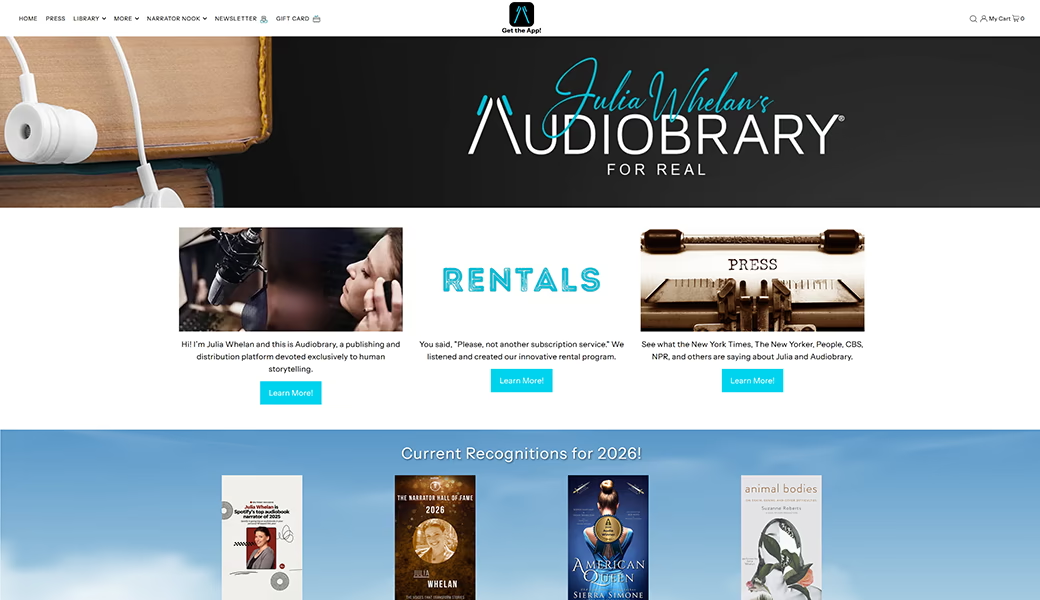
Audiobrary runs on Shopify for the storefront and payment processing, with Soundwise handling audiobook delivery to a listener’s phone app. The royalty accounting happens behind the scenes — when a customer buys a product, the sale is attributed to that specific audiobook, and revenue flows accordingly.
The front of the site looks like a thoughtful independent bookstore, not a subscription platform. Browse by title, by narrator, by series. Each book page leads with the book itself — cover, author, narrator, sample — and the purchase flow is direct: buy, receive an email with the listening link, open the app. No subscription, no credits, no lock-in. In fact, we implemented an innovative concept where a customer can rent an audiobook for a week at a substantial discounted price. This encourages listeners to expand their choices without having to pay a full price for experimentation. It is an alternative to the subscription model which the majority of customers were fed up with from other platforms.
Ongoing: new titles get added as Julia produces them. The catalog has grown steadily since launch, and the site gets a small refresh a few times a year as the business model evolves.
“When you purchase through Audiobrary, you are supporting the people who make the art, not the corporations that merely distribute it.”
— From Audiobrary’s about page
What was built
The specific pieces, in plain language
A Shopify storefront, shaped for audiobooks
Shopify out of the box assumes physical goods. We adapted the product model, collection structure, and checkout flow to fit audiobook browsing — narrator-led discovery, sample playback, series grouping.
Soundwise integration for delivery
After purchase, customers receive a link that opens in the Soundwise mobile app. The audiobook lives in their library — no DRM friction, no separate account to manage.
Royalty attribution in the backend
Every sale is logged against its title. The revenue data feeds the reporting that Julia uses to pay royalties each cycle. The business model isn’t a claim — it’s wired in.
Ongoing care, as a small platform grows
New titles added as they produce them. Small rebuilds each year as the catalog structure evolves. A working relationship with the business, not a one-time delivery.
Audiobrary is live and growing. New titles are added as Julia records them. The royalty model is working the way it was designed to work.
Want to see more of the work? →